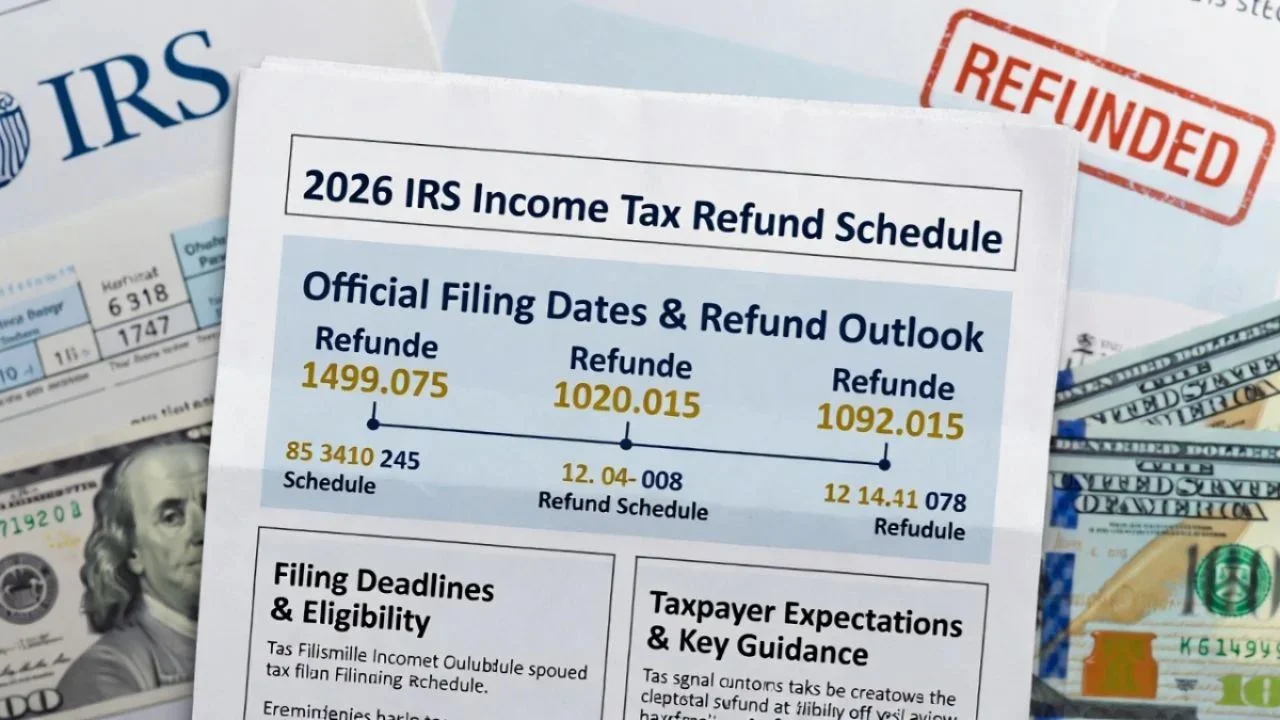
2026 IRS Income Tax Refund Schedule Explained: As the 2026 tax season begins, millions of Americans are getting ready to file their 2025 federal income tax returns. For many households, a tax refund is more than just routine paperwork. It is often used to pay rent, cover school expenses for children, handle insurance costs, or clear overdue bills. Because of this, understanding how and when IRS refunds are issued in 2026 can help families plan better and reduce stress.
Clear information about refund timing is especially important at the start of the year. Many people depend on their refunds to manage essential expenses, so knowing what to expect can make the filing process feel more manageable and predictable.
When the IRS Will Begin Accepting Tax Returns
The IRS is expected to begin accepting 2025 tax returns in the last week of January 2026, following the usual annual schedule. While many tax preparation services allow people to submit returns early, the IRS does not start processing them until its systems officially open. Submitting a return before that date does not speed up the refund.

The standard deadline to file a 2025 tax return is April 15, 2026. Taxpayers can request an extension for extra filing time, but this does not mean refunds will arrive sooner. In fact, filing closer to the deadline can sometimes result in slower processing because IRS systems become busier.
Why IRS Refunds Do Not Have Fixed Dates
Unlike Social Security or other federal benefits, IRS tax refunds do not follow a fixed payment schedule. The IRS does not release exact refund dates because every tax return is different. Refund timing depends on how the return is filed, whether it is accurate, and how complex the income and credits are.
Electronic filing combined with direct deposit is usually the fastest option. Many simple and error-free returns are processed within about 21 days. Paper returns, mailed checks, or returns that contain errors often take much longer and may require additional review.
यह भी पढ़े:
 IRS Announces Tax Relief for Storm-Affected Taxpayers, Deadlines Extended to February 2, 2026
Why Some Refunds Are Delayed by Tax Credits
Certain refundable tax credits can delay refund processing. Returns that include the Earned Income Tax Credit or the Additional Child Tax Credit go through extra checks to prevent fraud. Because of this, even early filers may not receive refunds immediately.
Small issues can also slow things down. Missing income forms, incorrect numbers, or delayed employer reporting can cause refunds to be held for review. In some cases, the IRS must manually examine a return, which adds more time to the process.
How to Track Your IRS Refund Status
The most reliable way to track a refund is through the IRS “Where’s My Refund?” tool. This tool updates once per day, so checking multiple times will not change the result. Refunds usually move through three stages, showing when the return is received, approved, and sent.

Even after a refund is marked as sent, it may take one or two business days to appear in a bank account. This delay is normal and depends on bank processing times rather than IRS action.
Is Filing Early a Good Idea in 2026?
Filing early can be helpful for several reasons. Early in the tax season, IRS systems are less crowded, which may allow faster processing. Filing early also lowers the risk of tax identity theft, where someone files a fraudulent return using stolen personal information.
However, filing early does not guarantee a faster refund if the return contains mistakes or missing details. The IRS focuses on accuracy before speed, so taking time to prepare a correct return is more important than rushing to file.

What the 2026 Refund Season Suggests
The 2026 tax season is expected to reflect gradual improvements in IRS processing, but delays are still possible. Fraud prevention checks, staffing limits, and return complexity can all affect timelines. While digital tools may continue to improve, refund dates will remain estimates rather than promises.
Preparing for a Smooth Refund Experience
Being prepared can make the refund process easier. Using electronic filing, choosing direct deposit, and carefully reviewing personal and bank details can reduce delays. Staying informed through official IRS tools helps avoid confusion and unnecessary worry during tax season.
Disclaimer
This article is for informational purposes only and does not provide legal, tax, or financial advice. IRS rules, refund timelines, and eligibility requirements may change and depend on individual circumstances. Readers should consult official IRS resources or a qualified tax professional for accurate and up-to-date guidance.