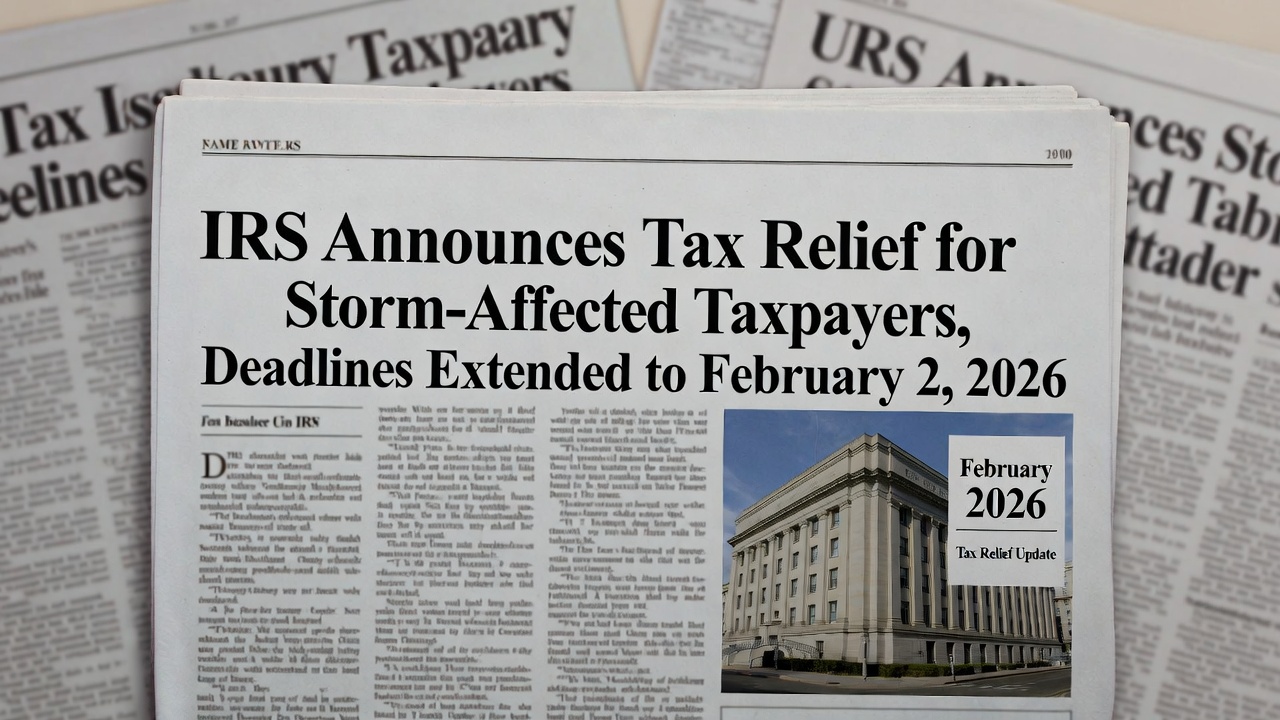
The Internal Revenue Service has announced special tax relief for individuals and businesses in parts of West Virginia affected by severe storms that began on June 14, 2025. The storms caused straight-line winds, flooding, landslides, and mudslides that disrupted normal life and business operations. Following a federal disaster declaration by FEMA, the IRS is giving affected taxpayers extra time to meet important tax obligations.
This relief applies to residents and businesses located in Marion County and Ohio County. Taxpayers in these areas now have until February 2, 2026, to file certain federal tax returns and make eligible tax payments. The goal of this extension is to reduce financial stress and give people time to recover from the disaster.
Who Qualifies for the Extended Deadline
Individuals who live in the covered disaster area and businesses whose main place of operation is located there automatically qualify for this relief. Tax-exempt organizations operating in the affected counties are also included. In addition, people who live outside the area but keep important tax records in the disaster zone may also be eligible for assistance.
Relief workers helping in the disaster area through recognized government or charitable organizations qualify as well. The IRS has confirmed that taxpayers do not need to apply separately if their address is already on file in the disaster area. The IRS system will automatically apply the relief.
Tax Deadlines Covered Under the Relief
The February 2, 2026 deadline applies to many common tax filings and payments that were originally due between June 14, 2025, and that date. This includes individual income tax returns, business returns, partnership and S-corporation filings, and certain payroll and excise tax returns. Quarterly estimated tax payments that fall within this period are also postponed.
However, it is important to understand that filing extensions do not normally extend the time to pay taxes. Even so, disaster-related relief allows qualifying estimated payments to be paid by February 2, 2026, without penalties. Interest may still apply in some situations.

Penalty Relief and Special IRS Support
If an affected taxpayer receives a late filing or late payment penalty notice for a deadline that falls within the disaster relief period, the IRS advises calling the phone number on the notice. The IRS will review the case and remove the penalty when appropriate. This relief helps prevent additional financial burden during recovery.
Taxpayers outside the disaster area who are affected because their records are located in the covered counties should call the IRS Special Services number to request help. Tax professionals who serve multiple affected clients can also request relief on behalf of their customers.
Claiming Disaster-Related Casualty Losses
Taxpayers in the federally declared disaster area may choose to claim disaster-related casualty losses on either their 2025 tax return or their 2024 return. This choice can help taxpayers receive refunds sooner if the loss is claimed on a prior-year return. Individuals generally have until October 15, 2026, to make this election.

Losses that are not covered by insurance may be deductible. Taxpayers claiming a disaster loss must include the FEMA disaster number 4884-DR on their tax return. This helps the IRS process the claim correctly and faster.
Payment Plans and Additional Relief Options
Taxpayers who are already on IRS installment agreements do not need to worry about defaulting during the disaster period. Missed payments will not cancel existing agreements until after February 2, 2026. However, interest and late payment charges may still continue to grow.
The IRS is also offering relief related to retirement plans, disaster distributions, and hardship withdrawals. Some disaster relief payments received from government agencies may be excluded from taxable income if they are used for qualified expenses such as housing repairs or living costs.

Disclaimer
This article is for general informational purposes only and does not provide legal or tax advice. Tax laws and disaster relief rules can change, and individual situations may vary. Affected taxpayers should consult the IRS official website or a qualified tax professional for guidance specific to their circumstances.