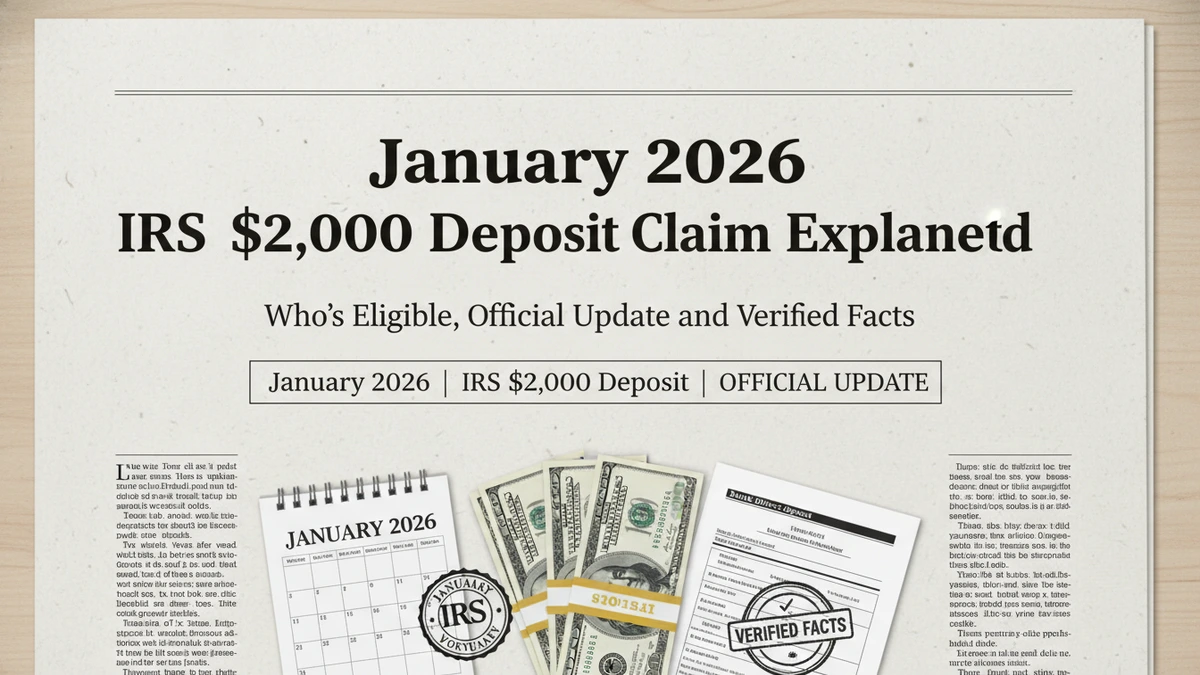
IRS today announced $2,000 Direct Deposit for All: As January 2026 begins, many American households are facing continued financial pressure. Rising rent, higher grocery prices, increased utility bills, and winter heating costs have made it difficult for families to stretch their monthly income. With these challenges in mind, news of a one-time $2,000 IRS direct deposit has drawn widespread attention across the country.
This payment is intended to provide short-term financial relief to eligible low- and middle-income individuals and families. It is designed to help households manage essential expenses during one of the most expensive months of the year. Understanding how this payment works is important for those hoping to receive it.
What the $2,000 IRS Payment Is
The $2,000 payment is a special relief measure issued through the Internal Revenue Service. It is not a tax refund, loan, or advance that must be repaid later. Instead, it is a one-time support payment aimed at easing financial stress at the start of 2026.
The IRS plans to send the payment automatically using information already available from 2024 or 2025 federal tax returns. This allows the agency to distribute funds faster without requiring most taxpayers to apply or submit new documents.
Why This Payment Is Being Issued in January
January is often a financially difficult month for many households. Expenses from the holiday season, combined with higher winter utility bills and ongoing inflation, can quickly strain budgets. For families living paycheck to paycheck, this pressure can become overwhelming.
By issuing the payment in January, the IRS aims to provide support when it is most needed. The timing allows families to cover essential costs before falling behind on rent, utilities, or other basic needs.
Who May Be Eligible for the Payment
Eligibility for the January 2026 $2,000 payment depends on income level, filing status, and residency. Individuals who filed a 2024 tax return or used the IRS Non-Filer portal may qualify if their income falls within the required limits. A valid Social Security number is also required.
Residency is another key factor. Eligible individuals must have lived in the United States for at least six months during 2025. Families with dependents may qualify for a higher total amount based on information already listed on their tax return.
When Payments Will Be Sent
The IRS has confirmed that direct deposits will begin on January 12, 2026. Payments will be released in phases rather than all at once. Taxpayers who already have direct deposit information on file with the IRS are expected to receive their money first.
Those without bank details on record will receive a paper check by mail later in January. The exact date funds arrive may vary depending on bank processing times and verification checks conducted by the IRS.
Importance of Keeping IRS Information Updated
Even though most payments will be sent automatically, it is important for taxpayers to review their IRS records. Anyone who has changed banks or moved to a new address should update their information through official IRS channels as soon as possible.
Outdated details can result in delayed payments, returned checks, or missed deposits. Taking a few minutes to confirm accurate information can help ensure the payment arrives without issues.
Partial Payments for Some Taxpayers
Not everyone will receive the full $2,000 amount. Individuals whose income slightly exceeds the eligibility threshold may still qualify for a reduced payment. The IRS will calculate partial amounts using income data from the 2024 tax return.
This approach allows more households experiencing financial pressure to receive some level of assistance, even if they do not meet the full eligibility requirements.
How Families May Use the Payment
For many households, the $2,000 payment can help cover rent, utility bills, groceries, or medical expenses. Others may use the funds to reduce debt or build a small emergency cushion. While it is not a permanent solution, it can provide meaningful short-term relief.
The payment is designed to stabilize finances during a challenging period and help households move into the rest of the year with less stress.
The January 2026 IRS $2,000 direct deposit is intended as targeted financial relief during a time of high living costs. By using existing tax records, the IRS aims to deliver support quickly and efficiently. Understanding eligibility rules, payment timing, and the importance of updated records can help ensure eligible households receive their funds.
Disclaimer
This article is for informational purposes only and does not constitute financial, tax, or legal advice. IRS eligibility requirements, payment amounts, and distribution timelines may change based on official policy. Readers should visit IRS.gov or consult a qualified professional for the most accurate and up-to-date information.