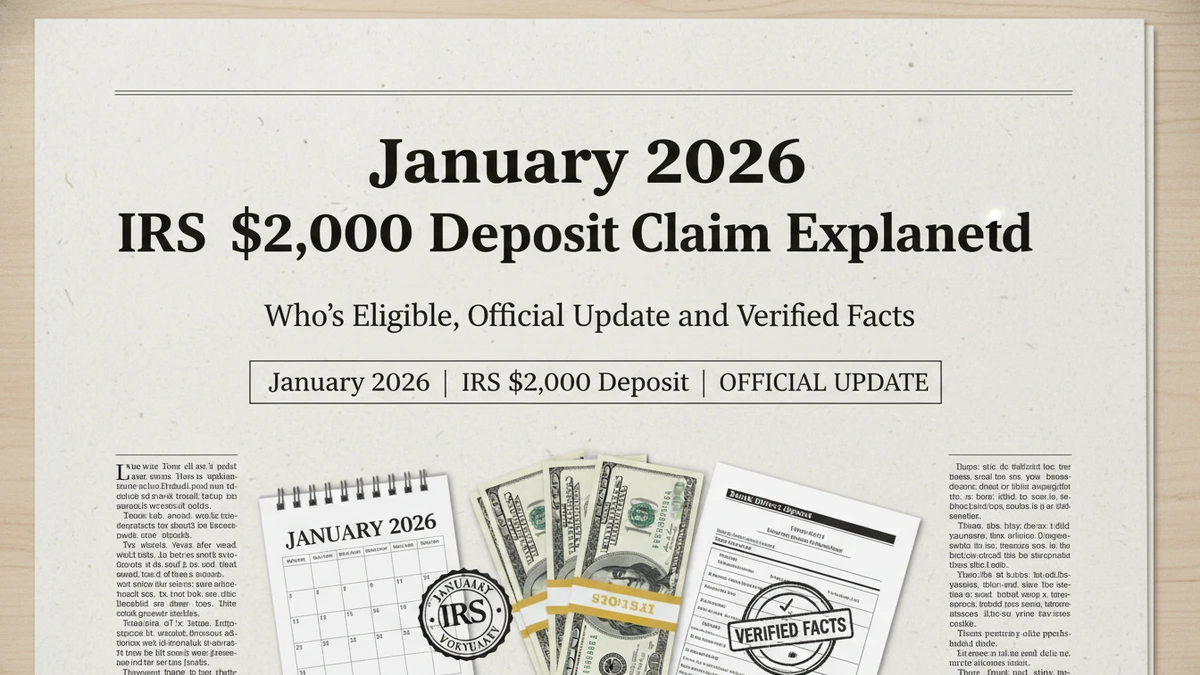
In recent weeks, claims about a “January 2026 $2,000 IRS deposit” have spread quickly across social media and private messaging groups. For many Americans facing higher living costs, rising rent, and expensive groceries, the idea of an unexpected payment felt hopeful. Screenshots, short videos, and confident posts made the claim seem real, even though most lacked reliable sources.
As excitement grew, confusion followed. Some people believed the payment was a new stimulus, while others thought it was a special reward for taxpayers. A few posts even suggested secret eligibility rules. This confusion matters because false payment claims can lead to bad financial decisions, unnecessary stress, and increased exposure to scams.
How the $2,000 IRS Deposit Rumor Started
The roots of this claim can be traced back to memories of pandemic-era stimulus payments. During those years, government relief deposits became common and highly publicized. As a result, many people now associate any mention of IRS deposits with stimulus-style payments, even when no such program exists.

In this case, bits of real information about tax refunds and credits were mixed together and presented as something new. Once these messages were shared repeatedly online, they gained credibility through repetition. Silence from authorities was misread as confirmation, rather than a sign that no announcement had been made.
What the IRS Has Actually Said
As of now, there has been no official announcement from the Internal Revenue Service about a universal $2,000 payment scheduled for January 2026. There is no new stimulus program, no automatic deposit, and no one-time payment being issued to all taxpayers.
When the IRS plans a payment, it is announced clearly on official channels. These announcements include eligibility rules, timelines, and explanations. The absence of any such guidance strongly confirms that the $2,000 January 2026 deposit claim is not real.

Why Some People Still See IRS Deposits in January
January is not a month for surprise payments, but it is the beginning of the tax filing season. Some taxpayers receive refunds early if they file quickly and choose direct deposit. These refunds are based on individual tax situations, not on a fixed amount promised to everyone.
Refund amounts vary depending on income, tax withholding, and eligibility for credits. In many cases, refunds happen to be close to $2,000, which fuels the confusion. When people share screenshots without context, others assume a new program exists, even though the money is simply a personal refund.
The Role of Tax Credits in Creating Confusion
Refundable tax credits play a major role in these misunderstandings. Credits like those for working families or dependents can significantly increase a refund. When these credits are included, deposits may appear larger and arrive early in the year.

However, these payments are not bonuses or gifts. They are calculated results of a tax return. Without filing and qualifying, no one receives them automatically. There is no eligibility list for a January 2026 $2,000 deposit because no such payment has been approved.
The Real Dangers of False IRS Payment Claims
Misinformation about IRS payments creates real risks beyond simple disappointment. Scammers actively take advantage of viral financial rumors. Fake websites and messages often promise to “release pending funds” or “check eligibility” in exchange for personal details.
The IRS has repeatedly warned that it does not contact taxpayers through social media, text messages, or unsolicited emails. Any message demanding urgent action or sensitive information is almost certainly a scam. Many victims only realize this after financial damage has already occurred.

Why This Rumor Feels Familiar
The persistence of this claim shows how deeply past stimulus payments shaped public expectations. Between 2020 and 2021, large federal payments were announced and delivered with speed. That experience made people believe similar payments could return without warning.
The reality in 2026 is very different. Any new federal payment would require public debate, congressional approval, and clear communication. None of these steps have taken place. Unlike past stimulus programs, this rumor exists mainly online, not in official news or government releases.
What Taxpayers Should Focus On Instead
Rather than chasing unverified claims, taxpayers are better served by focusing on real financial steps. Filing accurate tax returns on time remains the only way to receive any refund owed. Credits still exist, but they require proper documentation and eligibility.

Creating an official IRS online account helps taxpayers track real notices, refunds, and account updates. Relying on verified sources reduces stress and prevents costly mistakes. Understanding actual entitlements is far more valuable than hoping for payments that were never announced.
Why Hope Makes These Claims Spread Faster
The emotional reaction to the $2,000 rumor highlights a broader issue. Many households are financially stretched, and even a small payment could provide relief. That shared pressure allows hopeful stories to spread faster than cautious explanations.
Repeated disappointment, however, can increase anxiety and mistrust. Awareness is the healthiest response. Knowing how these rumors start and why they spread helps people protect both their finances and their peace of mind.
The January 2026 IRS $2,000 deposit claim is not based on any official policy or announcement. While IRS deposits do happen, they are tied to tax refunds and credits, not surprise stimulus payments. Understanding this difference is essential.
Staying informed through official channels, avoiding unverified claims, and planning finances based on confirmed information remain the best ways to stay financially secure in uncertain times.
Disclaimer
This article is for informational purposes only and does not constitute tax, legal, or financial advice. Tax laws, refund policies, and government programs may change. Readers should verify information through official IRS resources or consult a qualified tax professional regarding their individual circumstances.